

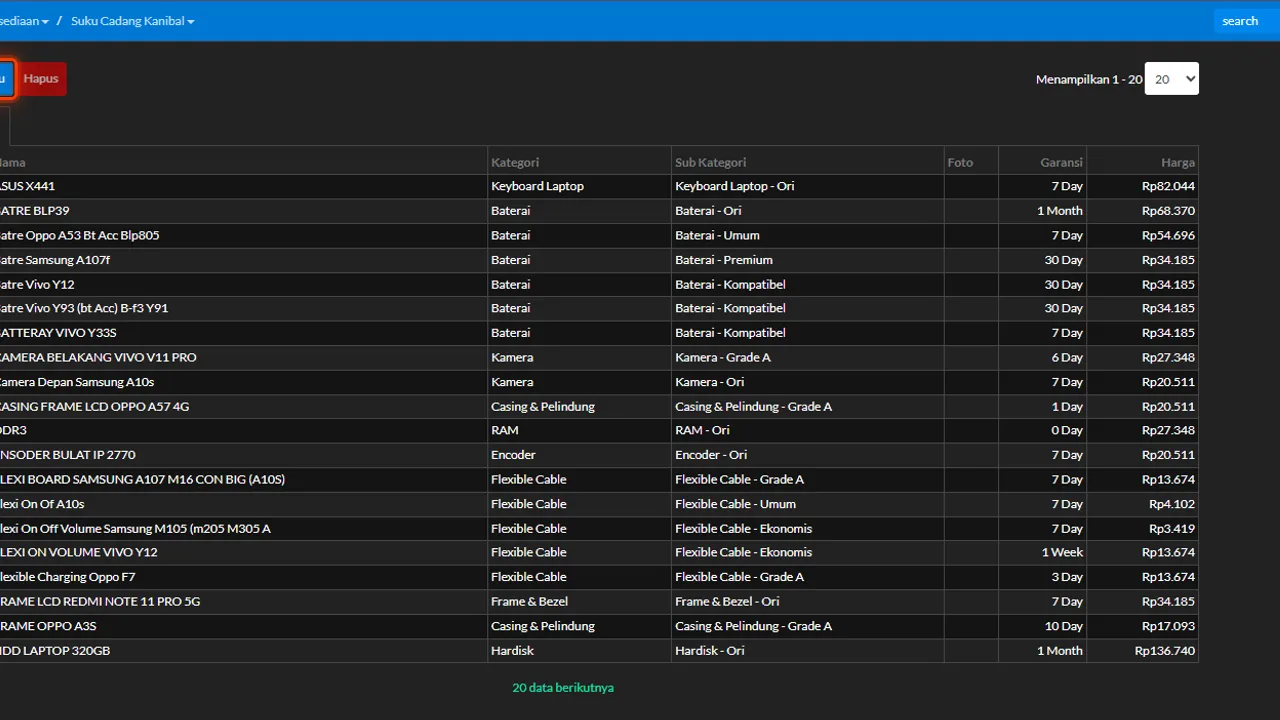
 An Automan screen related to this article.
The problem
Parts pulled from dead or trade-in units often get used “on the go”: installed into a customer’s device without ever being recorded as stock. Their value never enters the books, their usage leaves no trace — whether you gained or lost on them is never visible.
The tip
Treat salvaged parts like real stock: they get an identity, an origin (which unit they came from), and they leave through the same repair workflow as purchased parts.
Practical steps
- When you pull a still-usable part, register it as salvaged stock.
- Give it an identity: part type, source unit, condition.
- When it’s used, it goes out through the normal repair transaction — not quietly out of a drawer.
- Review stock history periodically: salvaged parts show their movements too.
When to use it
Any shop that regularly harvests parts from dead or used units — a common and legitimate practice, as long as it’s recorded. It’s not the salvaging that hurts you; it’s the absence of a record.