

When parts stock drifts, the cashier gets blamed first. Yet the root cause is usually wider: parts consumed by technicians, purchases arriving in stages, messy returns, or shelves that never get counted.
Blaming a person without finding where it leaks only guarantees the same drift next month. Let’s walk the causes one by one.
Cause 1: parts used in repairs without a record
In a repair shop, parts most often leave through the technician’s bench, not the register. A screen gets installed, a battery replaced — if that usage isn’t recorded on the repair job itself, the system still believes the part is on the shelf. A workshop leaks the same way with different goods: oil and filters consumed at the lift, brake pads swapped on the spot, none of it passing a register first.
The standard: parts usage is recorded on the job’s work record — the technician’s, or the mechanic’s — and that record is what deducts stock. Not re-typed by the cashier at closing time.
Cause 2: purchases that arrive in stages
Order 10, receive 6, the rest to follow. If the system only knows “purchased,” the 4 units still in transit already count as stock. Purchase records need to distinguish quantity ordered from quantity received — the difference isn’t missing goods, it’s goods on the road.
Cause 3: half-recorded returns
Goods come back from a customer and go straight to the shelf, but never into the system — physical stock now exceeds the books. Or the reverse: defective goods ship back to the supplier before the record exists — the books now exceed the shelf. Returns are a two-way door; record only one direction and drift is guaranteed.
Cause 4: salvaged and pulled parts
Parts pulled from scrapped units often get used “along the way” without ever becoming official stock. Their value goes unrecorded, their usage too — so the profit or loss they carry never surfaces. Salvaged parts deserve treatment as real stock: an identity, an origin, and usage through the same repair flow. The how-to lives in the salvaged-parts tip.
Cause 5: never counting
Every cause above only surfaces when physical stock is compared against the books on a schedule. A stock count is physical work — counting shelves can’t be automated — but the system helps: preparing the count list, comparing results against records, and booking the adjustment so drift doesn’t roll into next month.
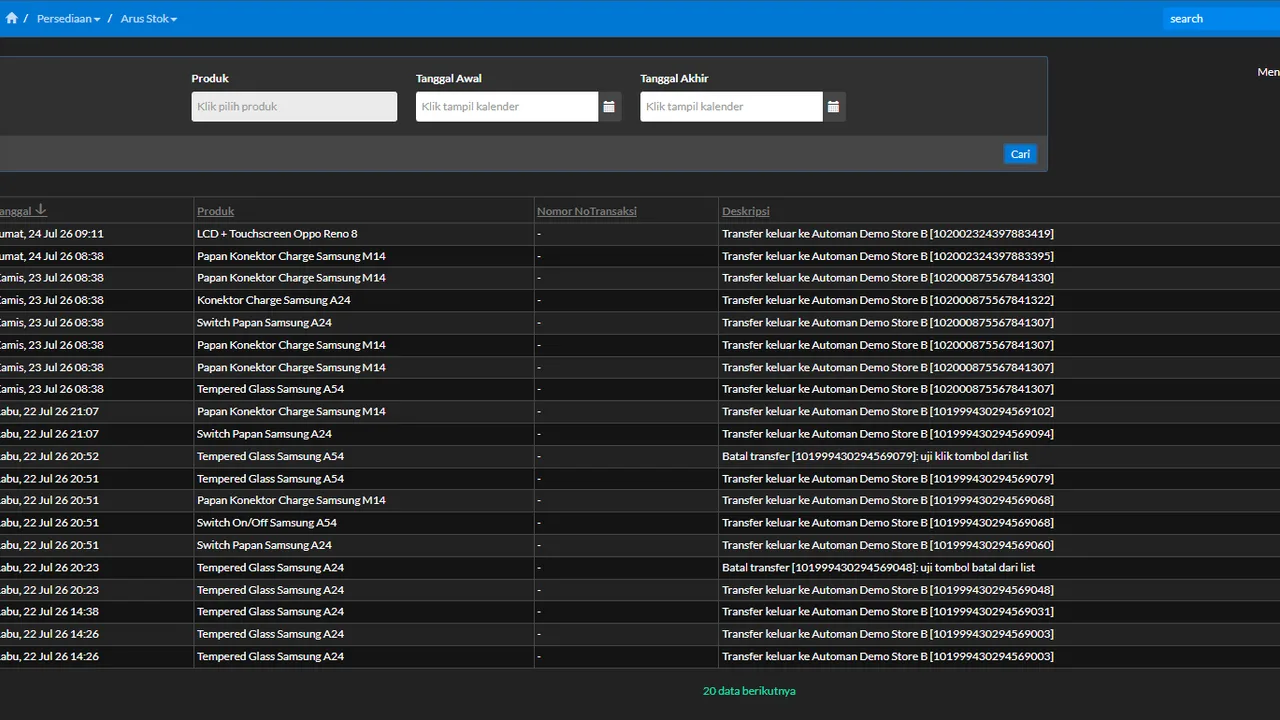
A realistic rhythm for a repair shop: a small weekly count for the fastest movers (10–20 items), a bigger monthly one for the full shelves. Counting little and often is far lighter than counting everything once a year — and drift gets caught while it’s still warm. The full rhythm lives in the stock-count article.
How to read it: drift is the symptom, the trail is the cure
A shop with healthy stock isn’t one that never drifts — it’s one that can answer “where did this drift come from?” in minutes. That’s only possible when every stock movement — in from purchases, out to repairs and sales, back through returns, gone as damage, adjusted through counts — leaves a traceable footprint.
In Automan, that footprint is a stock card that gives every purchase its own line — with its own cost, so goods bought at different prices are never flattened into one — plus a movement log covering every cause above, each line pointing at its source transaction. When a number looks strange, you trace it to a transaction — instead of interrogating the cashier. See the details in spare parts inventory.