

Phone repair is an odd trust transaction when you think about it: a customer hands an object containing their entire life — photos, chats, bank apps — to a stranger behind a counter, with nothing but a slip of paper as assurance. Shops that grasp how large that request is treat trust as a designed product, not a byproduct of friendliness.
Trust isn’t built by smiles — it’s built by certainty
Friendliness is mandatory, but it isn’t what calms a customer. What calms them is certainty they can verify: my device’s condition was recorded, I know how far along the process is, I hold written proof. The good news: certainty is far easier to systemize than charm.
Five trust signals you can install
1. Condition proof, in plain sight. When a unit is received, its accessories and physical condition (scratches, dents) are recorded — witnessed by the customer. The message cuts both ways: your device is safe from false claims by us, and we’re safe from false claims by anyone. Professionalism you can feel in the first 60 seconds.
2. Estimates up front, not surprises at the end. Cost and duration estimates are agreed before the unit joins the queue. If reality shifts (a pricier part, deeper damage), inform before proceeding — a bill that grows with consent is business; one that grows without it is a trap.
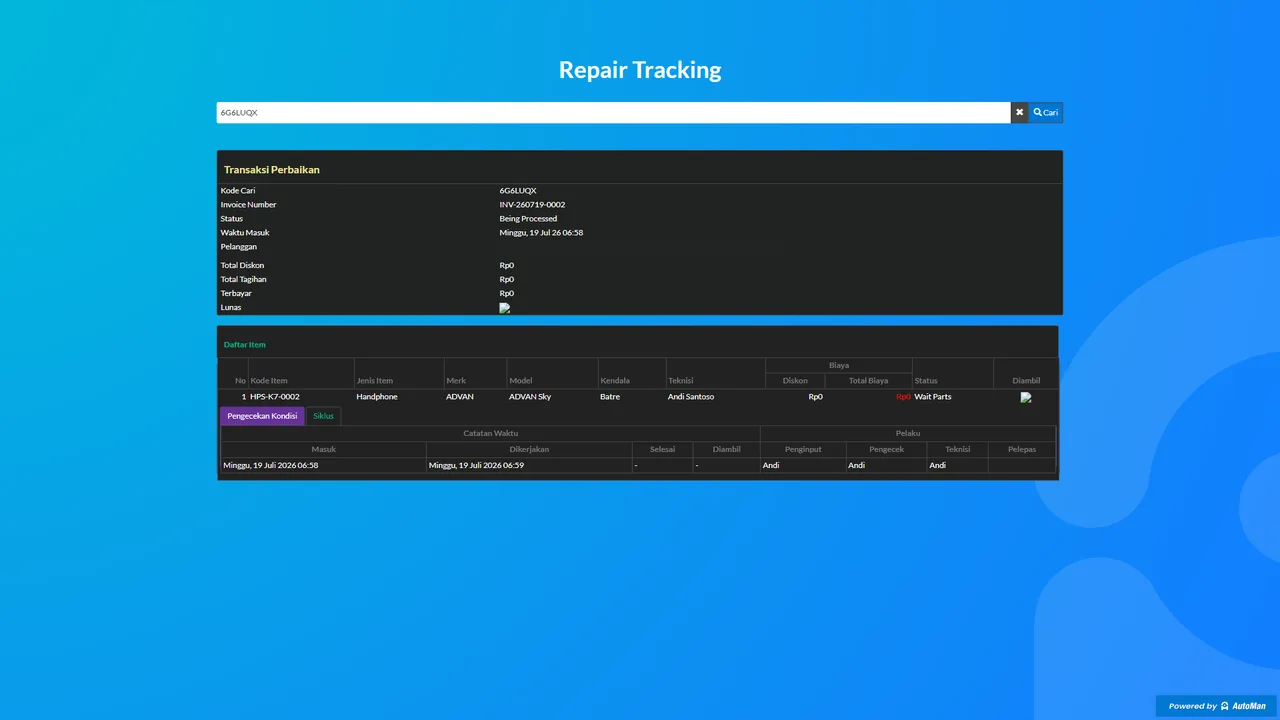
3. Status they can check themselves. Nothing erodes confidence like total silence after handing a device over. A tracking code on the receipt lets customers peek at the process anytime — no calling, no feeling like a nuisance:
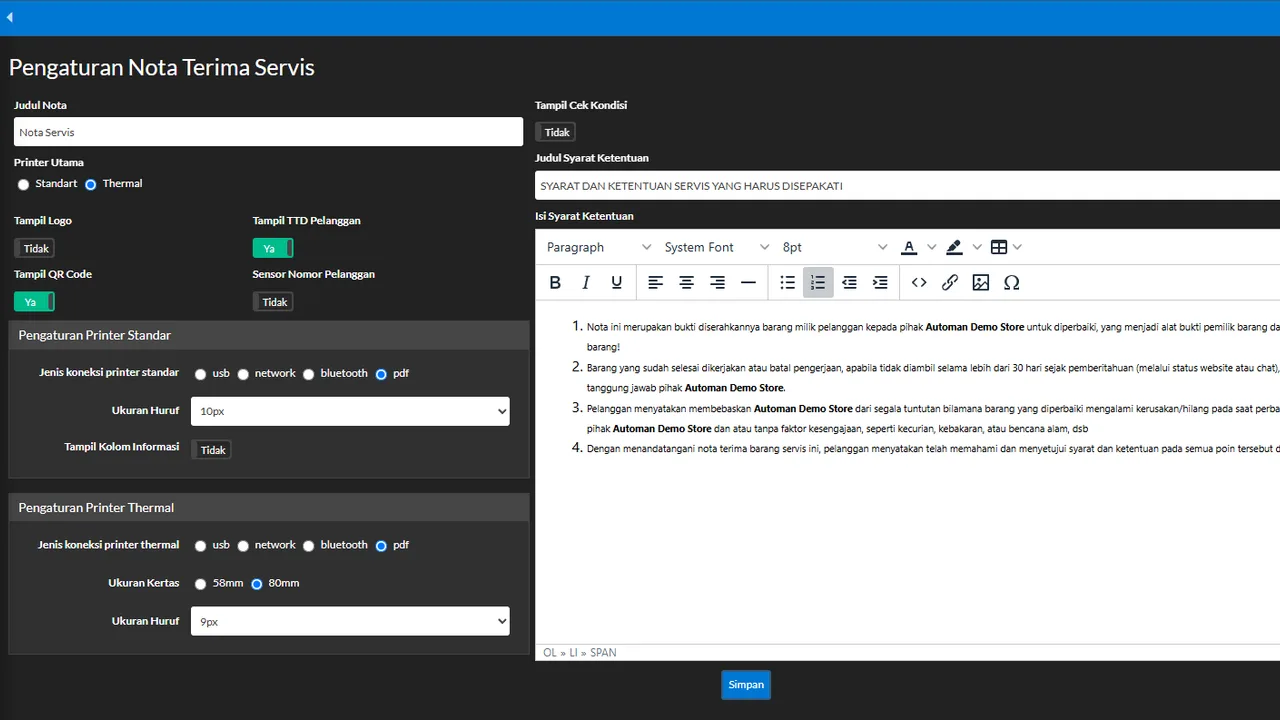
4. Warranties written specifically. “Battery warranty 30 days, until Aug 11” on the pickup receipt is worth ten spoken “it’s under warranty, don’t worry.” A promise you dare to write is a promise you dare to honor — and customers know it.
5. History that never disappears. Customer returns without the receipt? Found by phone number. A “you said it was still under warranty” dispute? Settled by a five-second search, not a memory contest:
The real exam: not the smooth days
Every shop looks trustworthy when repairs succeed. Real trust is tested in the bad scenario: the repair fails, the unit comes back, the customer is upset. A shop with a proper warranty-claim and returns path meets that moment with procedure — not panic. And oddly, that’s where the strongest loyalty is born: customers whose complaint was handled cleanly usually become more loyal than those who never had a problem at all.
Trust that spreads outward
Customers who trust you talk — and today their talking takes the form of reviews and family-group recommendations. Two habits that accelerate it: ask for a review at the happy moment (right after a smooth handover, not a week later), and keep the relationship warm with useful messages — status updates and warranty reminders — not promo barrages.
Start with the cheapest signal
All five signals above are side effects of proper record-keeping: the condition checklist, the estimate, the tracking code, the warranty on the receipt, the searchable history — one package inside a tidy repair workflow. Start from repair status tracking, then let certainty do its work: in the trust business, the most trusted shop isn’t the one that promises the most — it’s the one that’s easiest to verify.