

Paper receipts look simple — until a customer walks back in with a warranty complaint, a unit’s status can’t be found, or the technician can’t recall the item’s original condition.
This isn’t an article that blames paper. For a shop just starting out, paper receipts are often enough. The trouble arrives with volume: weaknesses that used to be rare start happening every week.
Three weak points of paper receipts
First, receipts get lost — on both sides. The customer loses theirs, and the pickup claim turns into a debate. The shop loses its copy, and the unit’s repair history vanishes with it. There’s no backup, because the only copy ever made was that piece of paper.
Second, paper can’t answer “how far along is it now?” A receipt only records the moment of intake. Everything between intake and pickup — who’s working on it, which part it’s waiting for, whether the estimate was approved — lives outside the receipt: in memory, on a whiteboard, or in a chat group that scrolls away.
Third, paper is weak warranty evidence. A warranty needs three things: when the repair finished, what was done, and what condition the item arrived in. Handwritten receipts rarely carry all three, so warranty complaints decay into a memory contest between shop and customer.
If these three problems already feel familiar, see how repair tracking and digital receipts in Automan close them one by one.
The more mature standard: the receipt as a door, not an archive
In a connected system, the receipt stops being a sheet of archive and becomes a door into the data:
- Condition proof — an intake checklist of accessories and condition (plus photos when needed) recorded on the transaction, not in the technician’s memory.
- A tracking code — the receipt carries a code or QR the customer uses to open their repair’s status themselves. What appears on the tracking page is shop-controlled: the shop decides whether the checklist, work cycle, or cost breakdown shows publicly.
- Searchable history — if the customer loses the receipt, the data doesn’t go with it. Search by name or phone number and the history surfaces.
- Warranty grounds — completion date, services, and installed parts recorded per unit, so warranty claims are decided from records, not negotiation.

Digital receipts don’t mean abandoning the printer
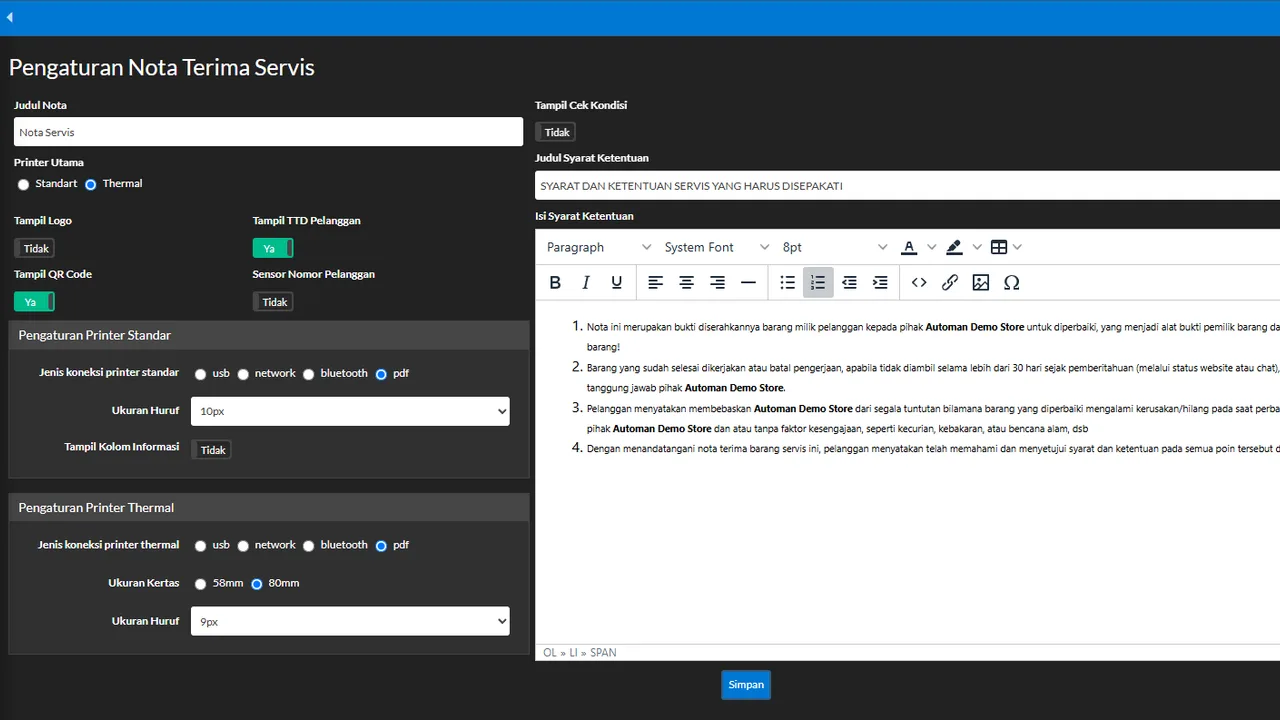
What changes isn’t the paper — it’s the source of the data. The shop still prints physical receipts for customers, generated from data the system keeps. Lose the paper, keep the data; that’s the whole difference.
When it’s time to move
The honest signal isn’t the shop’s age but the incident rate: receipts going missing more than occasionally, status questions interrupting actual work, warranty complaints getting hard to decide. When incidents like these become routine, the cost of staying on paper has already passed the cost of moving.
The first step is small: repair receipts done right shows what a proper intake record looks like — the receipt, status, and tracking code follow on their own.