

Status questions aren’t a small problem. When your front desk answers the same question over and over, the shop’s time drains into looking up information customers could have found themselves.
And the honest answer usually isn’t “needy customers.” Customers ask because they were given no other way to know.
Why customers keep asking
From the customer’s side, handing over a phone — or a set of car keys — means surrendering something valuable to a place they only half trust so far. As long as there’s no news, the only way to shrink the anxiety is to ask. A shop that provides no information channel is effectively ordering those questions daily:
- No completion estimate → the customer calls every day.
- No status markers → “how far along?” can only be answered by the technician.
- No word when it’s done → finished units pile on the shelf, cash sits uncollected.
The minimum standard: customers can check themselves
The cheapest fix isn’t hiring more front-desk staff — it’s reversing the direction of information: from a shop that gets asked, to a customer who can see for themselves.
The practical shape in Automan:
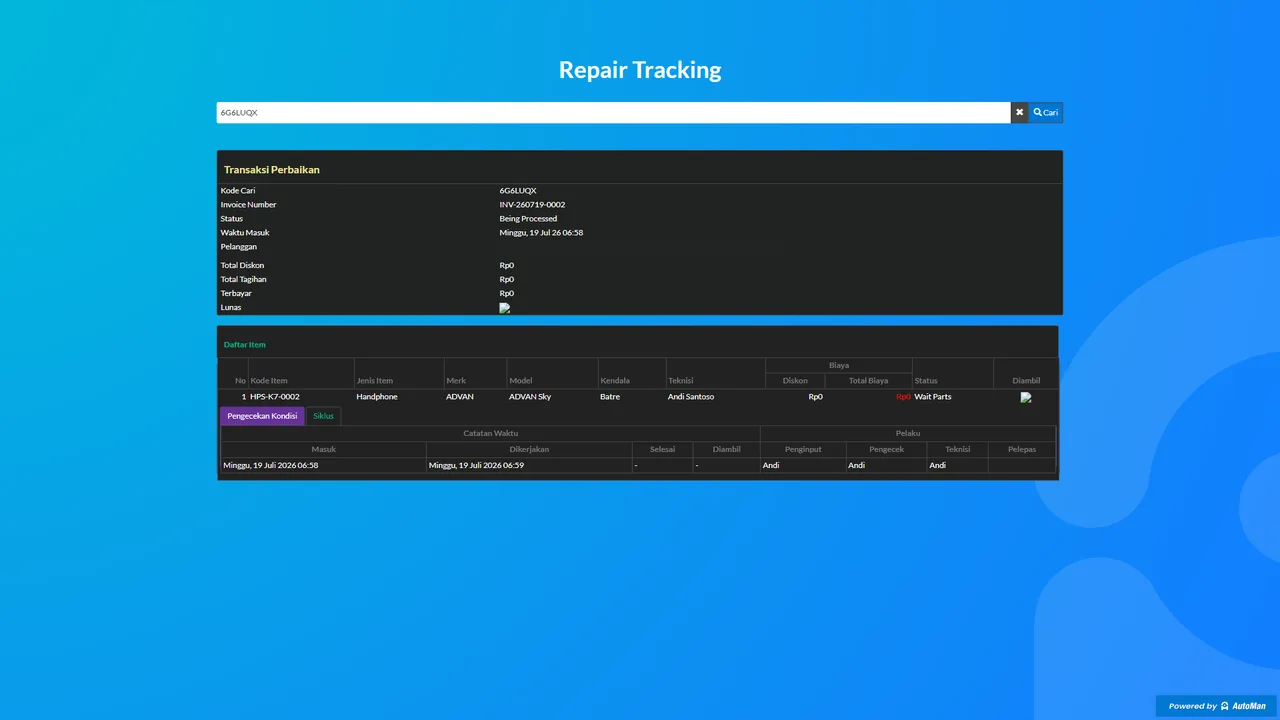
- A tracking code on the receipt — every repair job carries a short public code; the customer enters it on the tracking page and sees the current status.
- A QR on the receipt — for those who won’t type: scan, and it opens.
- A link via WhatsApp — message templates can insert the tracking link automatically, so “we’ve received your unit” carries its own door.
The part worth underlining: what shows is shop-controlled. The shop decides through settings whether the condition checklist, the work cycle, or the list of services and parts appears publicly — or just the status alone. Transparency is a configured choice, not an all-or-nothing package.
Message first, at the moments that matter
The tracking page answers customers who ask. The next layer is not waiting to be asked: send automatic updates at the moments that genuinely matter — unit received, a cost needing approval, and unit ready for pickup.

Those three moments close off most reasons customers call. The rest (off-schedule questions) still get a human answer — and that’s fine; the goal is fewer repeated questions, not zero conversation.
When a manual update is still the right call
No system replaces bad news that deserves to be delivered well. Costs ballooning past the estimate, a part on backorder, a unit that turns out unsalvageable — conversations like these should stay personal. The system helps by supplying the data (the original estimate, technician notes, condition photos), so the hard conversation at least stands on a clear record.
The payoff is more than saved time
A shop whose customers can check status themselves reads as better run — and that’s part of why customers come back. Questions drop, the front desk does other work, and finished units get picked up faster because owners know sooner. It all starts with one small thing: a tracking code on the receipt — see repair tracking.