

A cashier can tell you today’s sales. An owner needs to know further: where the money sits, whose receivable falls due, what stock went out, and where the profit actually came from.
The two needs get treated as one because both go by the name “reports.” In reality the distance is wide — and many owners only notice when they need an answer the register report doesn’t have.
What a register report answers
The register report answers the day’s operational questions: how many transactions, what sales value, paid through what. For closing a shift and reconciling the drawer, that’s enough. Trouble starts when the questions level up.
Five questions revenue can’t answer
- “Where is the money?” — $500 of revenue doesn’t mean $500 more cash. Some sits in the bank, some is still receivable, some already left again for purchases. What answers it: balances per payment channel and cash flow — not the sales figure.
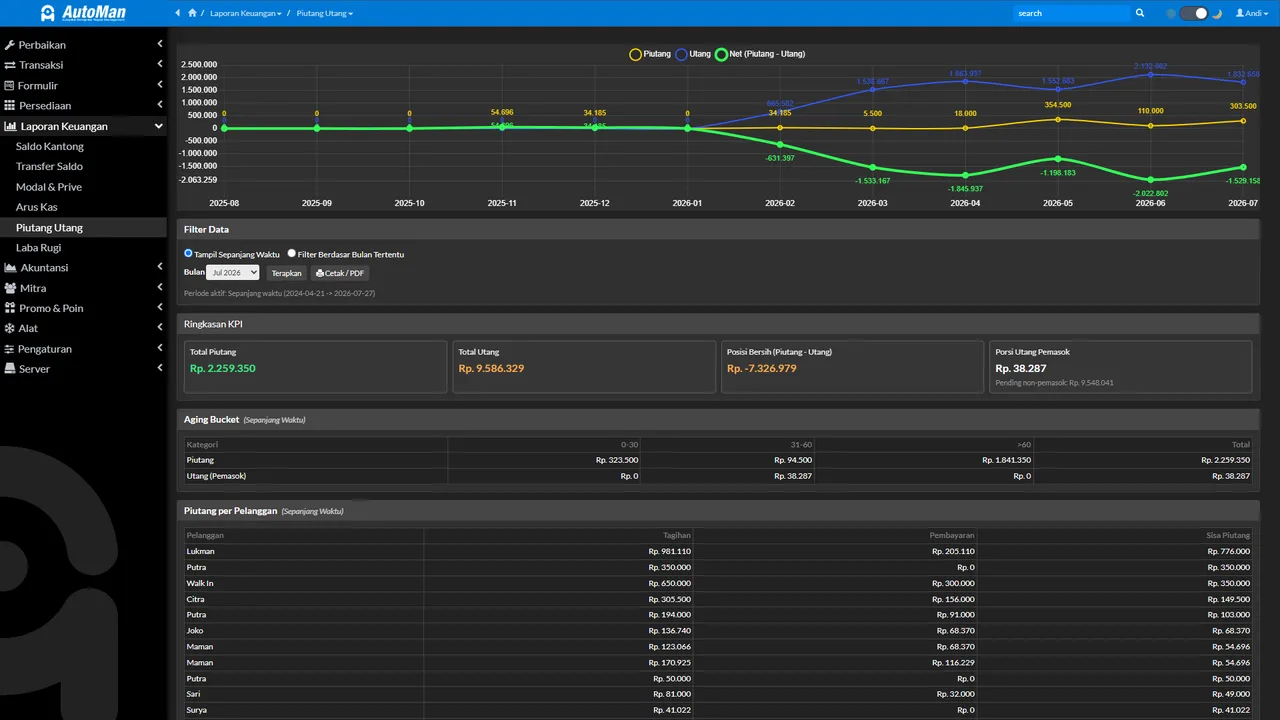
- “Who hasn’t paid us, and who haven’t we paid?” — Repairs picked up on a deposit, credit sales, supplier payables. Receivables and payables have due dates that appear in no sales recap anywhere.
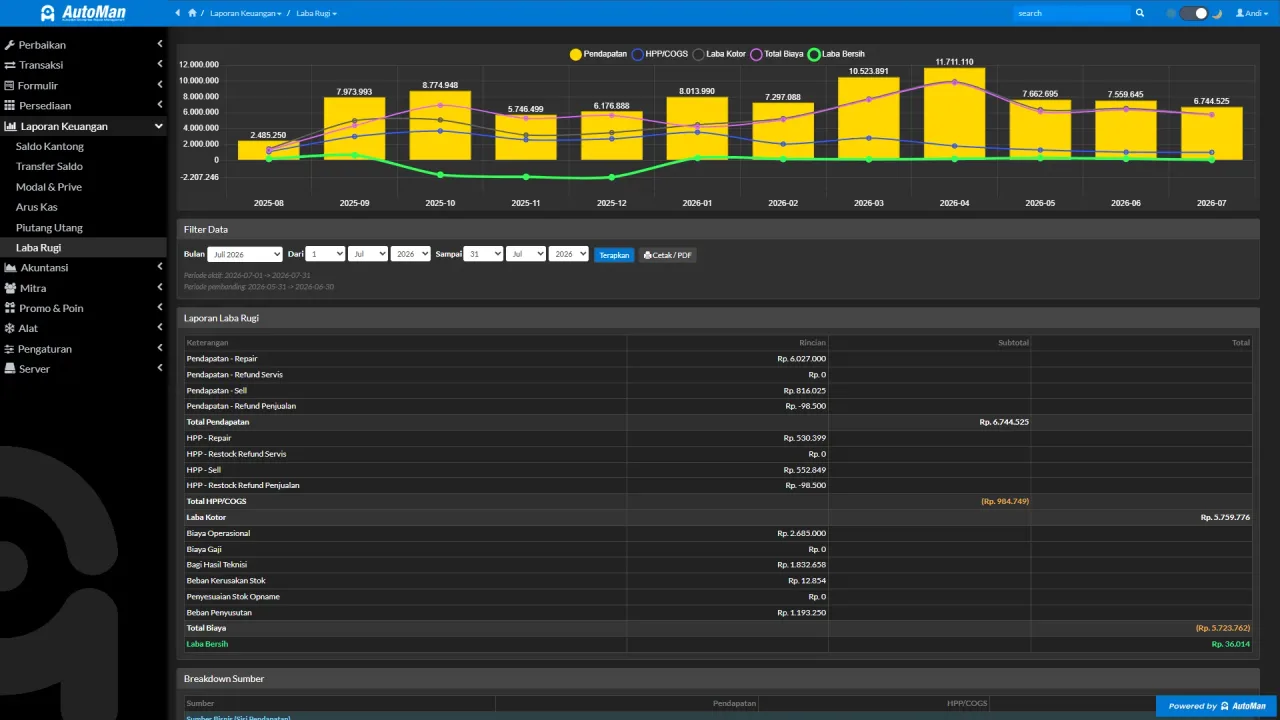
- “How much did we actually make?” — Profit = revenue − cost of goods consumed (COGS) − expenses. A register report stops at revenue. Without true COGS and recorded expenses, “profit” is just revenue that reality hasn’t been subtracted from yet.
- “Where did yesterday’s return land?” — Goods coming back change stock, may offset a receivable, sometimes become a refund. In a register recap, a return is a footnote at best; in a business report, it corrects revenue, inventory, and balances.
- “Where does this number come from?” — A good report traces to its source transactions. Manual recaps do the opposite: the more summarized, the harder to audit.
The staged standard: lite first, accounting when needed
The good news: answering those five questions doesn’t require the owner to study accounting. Two honest tiers are worth distinguishing:
Lite reports — computed straight from transactions: cash/bank balances per channel, cash flow, receivables and payables, and profit & loss. Owner language, no journals, no debit-credit vocabulary. For reading the shop’s day-to-day condition, this tier is usually enough — it’s the heart of owner reports.
Full accounting — for when the shop needs formal statements: a balance sheet, standard P&L, cash flow statement, period closing — typically because a bank, an accountant, or the tax office asks. A different class of need, not merely “more reports.”
Both tiers read the same transaction data. A shop that starts with lite reports doesn’t restart from zero when it steps up to accounting — the data has been accumulating since the first transaction.
A simple exam for the reports you have today
Try answering three questions from whatever reports your shop has right now, without opening a ledger or asking anyone: what’s the total of receivables due this week? What was the value of stock consumed last month? What’s the balance in each place money is kept?
If all three require a manual recap, your reports are still register reports. See how owner reports in Automan answer them straight from transactions.