

Software looks expensive because its price is explicit and arrives as a bill every month. Manual record-keeping looks free because its costs are scattered and never invoiced — yet they exist, and they’re often larger. This guide helps you count the invisible costs, so the “manual vs software” comparison is honest from the start — whether you run a car or motorcycle workshop or a phone repair counter.
Why manual feels free (it isn’t)
Our brains compare what’s easy to see. A software bill is clear: this much, every month. Manual costs arrive in shapes that resist adding up: an hour of recapping here, oil that nobody can account for there, a receivable nobody chased last month. Because they never land in one column, the total never appears — until you deliberately calculate it.
6 cost categories that never get invoiced
1. Your own and your admin’s recap time. How many hours a week go into recapping job sheets, matching cash, assembling reports? Multiply by what your time is worth per hour. With reports that assemble themselves, most of it disappears.
2. Stock and costing errors. Stock that doesn’t move when a mechanic pulls oil off the shelf, or a technician fits a replacement screen, means guessed costs. One wrong cost figure on a fast-moving part erodes profit all month, invisibly. Stock cards that hold cost per purchase close this gap — a cheap buy and an expensive buy are not flattened together.
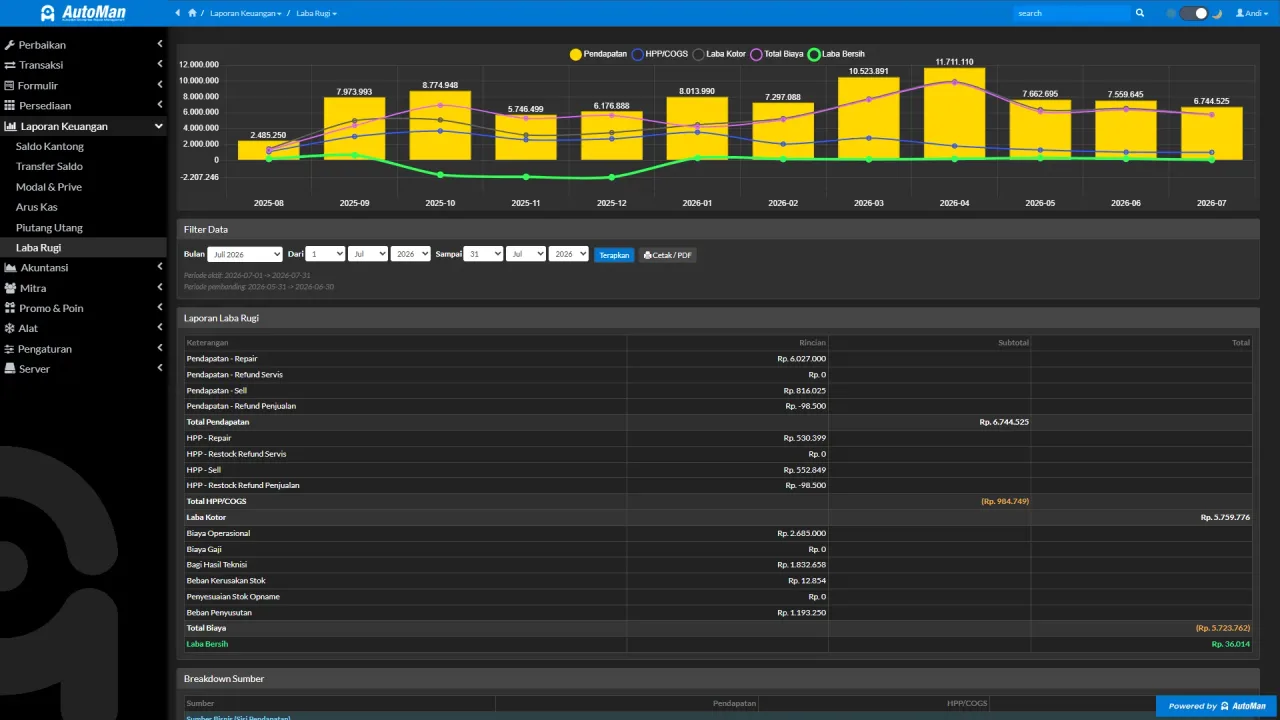
3. Time spent answering the same status question. “Can I pick the car up yet?” or “Is my phone done?”, several times a day, breaks focus and eats hours. Self-serve repair tracking hands that job to the customer’s own phone.
4. Returns & warranties without proof. A return scribbled on a job sheet slowly corrupts stock and receivables; a warranty without history can’t be checked when the unit comes back. Traceable returns & claims stop the leak — including telling apart a part you can still claim from the supplier and one that is simply a write-off.
5. Late receivables & payables. An unchased receivable is your money idling in someone else’s pocket; a late supplier payment costs you a relationship. Both need the kind of watching that manual methods routinely miss.
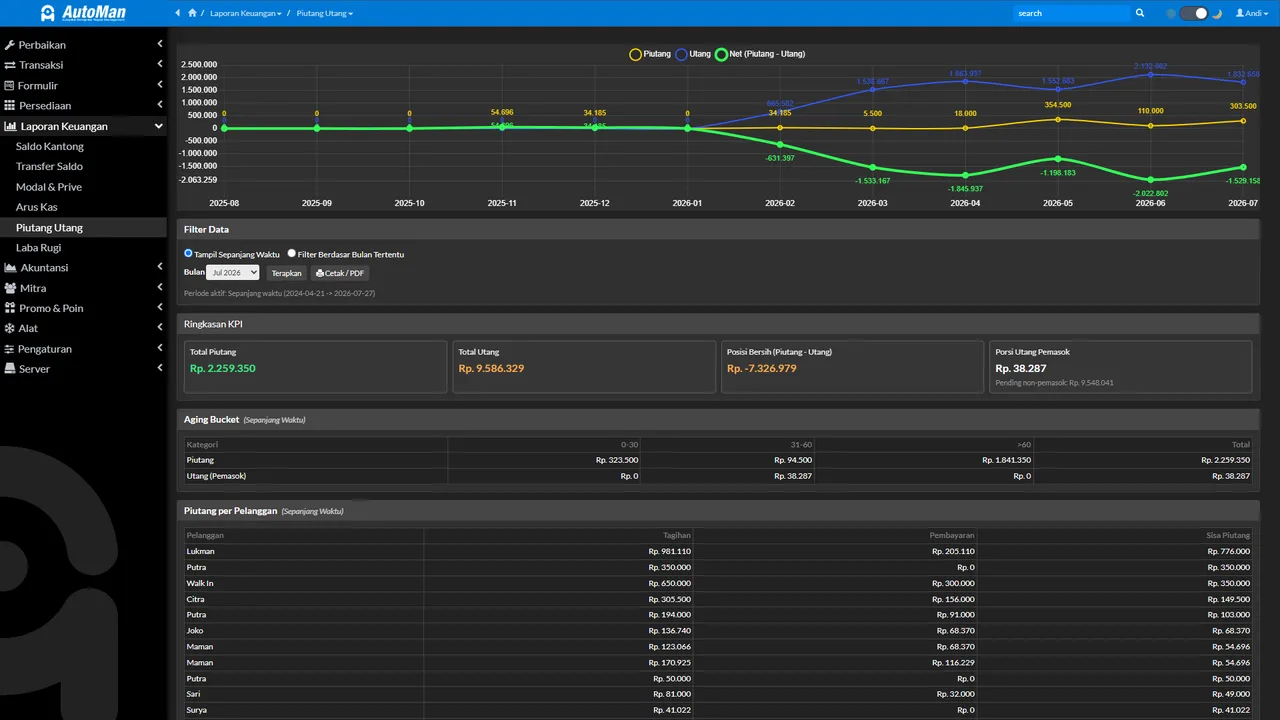
6. Data changes with no trail. Without a record of who changed what, mistakes (or dishonesty) surface only when it’s too late. The hardest category to price — and the most expensive when it happens.
How to calculate yours
No fancy formula needed. Take a sheet of paper and fill in these lines for your workshop or counter:
- Recap hours per week × your hourly value × 4.
- Estimated value of stock that “disappears” or drifts per month.
- Estimated receivables paid late or never, per month.
- Estimated jobs mispriced because the part cost was wrong.
Add them up. That number is your monthly cost of manual record-keeping — never billed, always paid.
Comparing fairly
With that number in hand, the comparison finally becomes fair: weigh the total cost of manual (your calculation above) against the total cost of software (subscription + learning time). More often than not, the hidden manual costs dwarf the visible subscription — especially when the Lite plan is free.
Manual isn’t a wrong choice; it’s just often more expensive than it looks. To decide when it’s time to move up, read manual records vs repair software. For a picture of your own trade: auto repair shop software or phone repair shop software. The full checklist lives in how to choose repair shop software.